Cooperative Communication: Digital versus Voice

Everyday communication has become a complex business. When I started my job, it was so much easier. We had 3 choices: face-to-face, telephone and hardcopy. It was challenging enough then, since few of us received training on communication as part of our education. In years past, I picked up the telephone to communicate without an appointment. If it was a bad time, the other person would tell me and we would set up a better time.

Now we have so many additional choices ranging from old fashioned email, the various forms of social media, texting, blogs, wikis, and face to face electronic conferencing like SKYPE or Google hangouts. Where do you get trained on when and how to effectively use all these ways to communicate?

A recent HBR blog post, “Just Call Someone Already,” attracted over 100 comments and focused on when to use the phone versus email, often used instead of the phone. I resonated with the author, Dan Pallotta in his comment, “Much worse than the inefficiency of using email to set up phone calls are the missed opportunities and unnecessary misunderstandings that come when we use email instead of phone calls.”

Today many feel compelled to text or email a person to schedule a call, and better yet to avert the call, since many view phone calls as an inefficient use of time, an interruption to their day. Nobody has a monopoly on busy, and this attitude about interruption and efficiency at the expense of building human relationships seems unkind. It also feels selfish to me, since these folks are just considering their preferences, not the other person’s.

Email is often used to express emotions or feelings that people are too embarrassed to say. However, I think it’s better to confront the other person and clear things up over the telephone or better yet in person. I have received more rude emails, where people write things they would not have the nerve to say to my face or on the telephone. Another downfall of email is when it gets sent to too many people that don’t need to know or care about your communication.

I also notice rudeness in LinkedIn comments, Twitter and Facebook, where there is one up man ship professionally, for example. I resent the number of emails I get in my LinkedIn inbox asking for endorsements; please take a survey; buy my service—which these people presumably blast out to their LinkedIn connections just like email spammers. There is more blatant WIFM (what’s in it for me) in the digital world.

Everyone seems to agree that face-to-face is still the best way to connect as you can read the person’s body language which is so revealing. But in today’s world we are so scattered that many of us can’t easily or cheaply meet face-to-face. I always recommend that people connect the next best way which is often the telephone, SKYPE or Google hangouts.

However, email is still the steam engine for digital communication since it leaves a written trail, and you can communicate with many people simultaneously in one email, and time zones don’t matter. You can also attach a document for people to review, not an option with the phone, but an option with SKYPE or Google hangouts.

A best cooperative intelligence practice is to think about how the individual you want to reach likes to be communicated with, even if it’s not your preference. People in Sales figure this out pretty quickly.  They call; they fax; they email; they in-mail; whatever it takes connect to decision-makers. Another cooperative best practice is only send communication to those who will value it.

I am pretty open minded about communication. I like to stay in touch with friends and colleagues. In one win/loss project, I was doing one on one interviews. I emailed to set up a call with one non-customer. He refused, but did offer that he would be happy to email me answers to my questions. I got some of the best insight from this gentleman—all because I listened and accepted his preferred communication.

How to be a Competition Detective: Eliciting Conversation

People often ask me how I engage people so readily in conversation over the telephone.

“Who do you say you are? Why do you say you’re calling?”

The first question is easy to answer. I always say I’m Ellen Naylor.

The second question is harder to answer without more context. Is it a cold call or a warm call? A cold call is when you don’t know the person and they don’t know you. A warm call is when the other person doesn’t know you, but you know them through your sources. Or it might be a hot call which is the easiest: you and the person you’re calling both know each other and why you’re calling. You have different preparation for each type of call. But you need to have a good entrée to each person so they know in short order why you’re calling, what you want and what’s in it for them to give you their time for an interview.

With all calls, you want to give the person a good reason to talk with you, and not waste their time with small talk and listen very closely to how and what they share and don’t share with you. With a cold call, I research the person’s profession and try to find out what about that profession I can relate to or not, and get the conversation going. After a few interviews you get even more ideas about what they do and don’t tend to like about their job.

In a healthcare query each person I spoke to was a recruiter for medical professionals who traveled to different hospitals around the US for work. I got their attention by mentioning that it must be challenging for their employees to be away from their families. With others, I mentioned how much I liked to travel. This simple entrée got most of them talking.

Using elicitation techniques, another great entrée for me is, “I’m Ellen Naylor and I wonder if you can help me.” Then I tell them why. People often can’t resist the urge to be helpful in our US culture, especially when talking to a female who sounds young.

People can’t resist the urge to show off a bit if you flatter them with, “I hear you’re an expert in this area,” or “I want to understand what you do and don’t like about this equipment. Companies can only make product improvements if they hear what’s wrong. They also need to hear what’s really right so they don’t go changing those features.”

If someone is a little hesitant and less interactive, I often ask if this is a bad time, and will call them back later. Other times this hesitation means they expect me to share something in return before they’ll start talking. So I will share some tidbits I have learned, and these can be my best interviews. In a recent project, I called one of these hesitant guys back at 6:30 a.m. his time. We conversed for about 45 minutes, and I felt like I had a new friend by the end.

Warmed up calls are so much easier since you don’t have to quickly convince a stranger that you’re worth talking to. However, you do need to respect their time and be polite. One way is to hone in on relevant information about them so you can ask better and tighter questions.

The bottom line is I consider who I am talking to and the questions I need to have answered. I try to think of all the ways the person might answer them, so I am more prepared for the unexpected. Calls seldom go as planned whether they’re cold, warm or hot. You are dealing with another human being. Be flexible and prepare additional questions for the unexpected turns of an interview. Don’t take yourself too seriously and keep that smile on your face.

Find out how innovative ideas spread like the flu

Here’s another vote to have strong #networks! http://ow.ly/h4r5Q #connection @FastCompany

Harvard Professor, Nicholas Christakis tells us how network science reveals that innovation–much like the dreaded flu bug–is contagious. Here’s where you need to position yourself to catch one (and maybe avoid the other).

“Individuals located centrally within a network will be at both an increased risk for the acquisition of a pathogen,” Christakis says tells Fast Company, “and an increased risk for the acquisition of novel information. If you’re trying to get people to work better,” Christakis says, “it’s not enough to think about individuals, you’ve got to think about how the group of individuals is connected or organized.”

This is similar to how we connect with highly networked individuals cross-functionally across our companies as competitive intelligence professionals. Being connected to the right people is one of the keys to a successful competitive intelligence operation.

For a more detailed explanation, check out Professor Nicholas Christakis’ TED presentation entitled, “How social networks predict epidemics.”

Improve your Primary Collection through Relational Voice

Yesterday I was reading Lee Glickstein’s relational presence description, and it spoke to me. In relational voice, you start with deep, relaxed breathing and use your voice to almost do inner calisthenics. As your voice comes out in the exhalation with great pleasure, you free up your brain and allow yourself to relax. Lee discusses this in the context of public speaking, where is the founder of Speaking Circles International.

I was thinking this exercise will strengthen those doing primary research of any type whether it’s cold calling, win loss analysis calls or trade show collection. If you learn to love your voice, and allow yourself those extra seconds to interact with those you are interviewing, you will listen more intently and talk more consciously. This is powerful stuff for those of us who interview people. In those extra seconds, which is such a short time, if you are really grounded and connected with the other person, you can think of additional ways to connect or to simply tweak the next question on your list since you might notice how they don’t like to talk much, so you shorten the question and ask it more softly.

These days the people we interview are so busy that they don’t have time for long interviews, so you need to make every minute count. The same exercise to help you reach your relational voice can help you connect with those you interview more quickly since you put yourself aside in this process, and just concentrate on the other person’s energy. Just imagine how powerful you will be when combining this skill with elicitation/interview preparation.

Check out Lee’s site, and try his exercise to get grounded with your eyes closed before you make those phone calls. I guarantee if you get fully grounded, those calls will go a whole lot better. You will also be more effective on those days when you really don’t feel like making phone calls. Try it out and let me know how it works for you!

Maximize Your ROI through Competitive Intelligence

This is the second in the series from my Pecha Kucha presentation for our SLA Competitive Intelligence tournament. In the first I described life as a competitive intelligence professional back in 1985.

This will focus on maximizing your ROI (return on investment) while providing market intelligence. You want to prove your worth as soon as you can. First you must find out what is missing that you CAN PROVIDE ETHICALLY! We conduct interviews with those who fund our competitive intelligence initiatives, as well as those we know will ultimately be great sources of CI (CI sources and users will often be the same people, but not always).

I was fortunate in that I came from field Sales, so I knew sales intelligence was an area where I could improve our company’s ROI by helping them win more deals. I had a good idea how I could help without interviewing anyone, since I knew what we were missing. We didn’t have regional detail on how to win against specific competitors. We just had a global outlook on the competition, and this was too broad to be useful. In addition, people in Sales didn’t know each other, so I could connect individuals who were combating the same competitor, and let them strategize together. Then I could share their success story so others could take advantage and win more deals. This would pump up the sales force, so they would share even more with me, since they liked this kind of publicity.

Competitive intelligence is a support role. You need to shelf your ego. I learned that I portrayed a cooperative attitude which I have since dubbed “cooperative intelligence”, which opened up the floodgates of sharing from Sales in particular. I went to them on a mission to help them, rather than to extract information from them. This was a first for them. Since I was a giver and a listener, this cut through politics and promoted information sharing. When you give without the expectation of something in return, anyone can tell.

There are more subtle ways to gain brownie points with Sales. I noticed that most staffers were coming to sales people with requests for information repeatedly, and that their requests were often for similar or even for the same information. I decided to become a conduit for others in our headquarters staff to centralize and consolidate their requests for information from Sales. Sales loved this since this reduced the number of staff requests. I also kept track of what other staffers had collected from Sales, so that I could intervene in some cases when Sales had recently already provided this data to a different staffer. Staffers appreciated this too since most of them didn’t like to call Sales with requests for information. This is a great way to insert yourself into the Sales process and prove your value. It doesn’t take much extra time, and Sales is really grateful.

Even doing all these things “right,” it still took me about 2 years to connect with Sales throughout our company. You cannot rush connection and relationships. It takes time to build trust.

It took me a little longer to connect with Sales Vice Presidents, the subject of my next blog.

Competitive Intelligence in 1985

When I wrote my Pecha Kucha presentation for our SLA Competitive Intelligence tournament, I decided to go back in time to 1985, the first year I focused entirely on competitive intelligence. This is the first in a series about how I evolved in my career in competitive intelligence, and what I have learned over time. Overall I am glad I had a start back then for the critical thinking and deeper relationships I developed. I am glad to still be in this field today where I can reach out to sources quickly that I would never have dreamed even existed, thanks to social networking.

1985 was a very different time and I will focus on the US.

  • Gas was $1.09/gallon
  • Movies were $2.75
  • Rent averaged $375/month
  • The Fed’s interest rate was 10.75%.

Technical differences were also noteworthy:

  • Windows 1.0 was introduced
  • CDs were introduced in the US in 1985
  • The first mobile telephone call was made in the UK by Ernie Wise

I started to focus on what we called competitive analysis just before the Society of Competitive Intelligence (SCIP) was formed, and didn’t learn about SCIP until 1989, two years before SCIP published its first membership directory. I worked for Bell Atlantic, a new company then, a Baby Bell from the initial AT&T divestiture. We were working out our company infrastructure as I was figuring out how best to provide and collect competitive intelligence.

I did not have a PC at my desk. My telephone was the most immediate form of communication with most of the company, although I could easily have in-person meetings with our product and marketing managers who sat close-by. In fact I had to be careful not to attend too many of their meetings else I wouldn’t get my work done. It correlates somewhat to spending too much time on email and social networks today.

We shared a fax machine among many of us, and waited in line at the photocopy machine. Secretaries typed up memos and reports. We took notes by hand. We memorized people’s phone numbers and had a Rolodex of names. I cross referenced my Rolodex names by job function in case I forgot a person’s name. We used company mail and US mail (which we didn’t call snail mail) for written communication.

Presentations would be typed up, given on overhead machines or written up on flip charts. I spent less time putting together presentations through these primitive means than I do today on PowerPoint decks since our standards were lower. I think people spent more time listening to what you had to say back then, since what you produced wasn’t much to look at. It also meant you had to know your stuff since there wasn’t the crutch of media to support you. People asked more questions and had more comments since they couldn’t easily get smart before a meeting like we can today by accessing the Internet to read up a bit.

I read the news in hard copy. We distributed news sources like Time, Business Week and Fortune among ourselves. I got my own copy of The Wall Street Journal which I read daily. We noted who got which industry consultant reports and subscriptions throughout Bell Atlantic. It could be that our Philadelphia office would get the only copy of an expensive industry report, and we would have to wait our turn to read it due to copyright issues.

The first organizational thing I did was a personal SWOT. My strength has always been visionary. I can see the big picture pretty readily and am creative. I am not strong with the details and execution although I am highly intuitive. I was lucky and found a wonderful lady to work with who was great with people and had a similar work ethic to mine. Unlike me, she was attentive to detail and great with execution. Over time we became a strong team, and are still friends some 25+ years later, although we live 2000 miles apart.

Our opportunity and our immediate threat were the same thing:

  • Learn how each of our regions communicated
  • Learn each region’s culture
  • Learn how individuals were motivated to share
  • Learn how individuals and each region would accept facts and ideas from a centralized group outside their region, namely us

We had to talk with each other more often than we do today, since there was no email; no voice mail or social media connection. I got copies of company’s (competitor’s) press releases from my company’s industry liaison person soon after she received them, so I could pass on the scoop to my company clients.

We had to use our creativity to achieve real-time intelligence, since people were our only real-time source, and we had fewer people we could reach out to since our world was smaller. On a positive note, our relationships with people were deeper, perhaps since we had fewer relationships. Our critical thinking skills were naturally sharpened with these deeper relationships. I had a few people outside the company that I had provocative discussions with often. These people helped me reach outside of Bell Atlantic’s culture and expand my vision of the competitive environment.

Independence or Not?

It’s Independence Day in the US, and it makes me wonder how independent we are as individuals. These thoughts were inspired by “The Busy Trap” in the New Times by Tim Kreider.

How many times have you heard people say, “I am too busy. I am soooo busy.” Are most of us really busier than we used to be? Or are we imposing busyness by all the distractions of everyday 21st century life? I think the only ones who are truly too busy are those who are pulling 3 jobs barely scraping by; students who also work long hours while at university; single parents who no longer have the means to support their family; and those who take care of their elderly parents while also raising kids and working. Not only are they too busy, they are tired and we are losing their creativity while they are in these circumstances.

I traveled a lot in the last month to Illinois, Indiana, Minnesota, DC, Virginia and Maryland. While I didn’t think about it, I found myself engaging with the present, with the people I was around and paying less attention to my social networks. I found myself a lot more relaxed, and less busy! I slept longer and was in a better mood. Laughter, which comes easily to me, was ever present. How many ways do you need to connect every day? Do you have to be connected to Twitter and Google+ constantly? How often do you need to log into LinkedIn not to mention Facebook and Foursquare? Do people really need to know what you’re doing all the time and where you ate and what airline you’re flying? Knowing when to connect on social media is a competitive advantage for individuals and for companies. Knowing when not to connect gives you more independence.

We have have had a record amount of fire destruction in Colorado already this summer. I don’t watch TV, another way that I am less busy. Last week when the Waldo Canyon Fire in Colorado Springs expanded ferociously from the wind gusts and dryness, I was in touch with the present through Twitter feeds and the live video-stream on the Internet. Soon we will have systems in place to help the many families who lost their homes build back their lives.

So how does this translate into competitiveness? We are flooded with incoming information and ways that people steal our time from us, if we pay attention to all of it, or even to too much of it. You don’t need to know ALL the information out there about your marketplace, new technology, the economy, the political situation, your customers, your suppliers and your competitors. Rather you need to know WHEN to pay attention when you are NOTICING CHANGE. If you spend too much time listening to all the chatter you might miss the important changes or your ability to predict how the marketplace is evolving and what you need to do to stay on top or at least to stay competitive!

So on this Independence Day, think about how you are going to regain some lost time in your life by turning down some of that “social noise,” tempting though it be. Learn how to relax again. I plan to enjoy my Mom today who is 94 and is visiting us. Maybe that’s why “The Busy Trap” spoke to me. I want to relish the time I have with her today. BTW she is napping now.

Timing is Everything in Win/Loss Interviews

Too many product managers seem to avoid customer interaction. While they know that customer Insights are useful to define products, features and the marketing message, there is this fear of customer confrontation. Yet most customers are actually quite willing to share the experience of dealing with your sales force, and how they chose your product or a competitor’s.

In a recent webinar I learned a few new things about the psychology behind conducting win/loss interviews. I have always told clients to makes sure that the sale is complete and implemented before handing them off to me to interview. In the webinar, Steve Johnson of discussed the timing of the win/loss interview.

Customers are the least confident during implementation, and often experience stress, so you are less likely to get a clear headed reaction to their decision-making process, and what features they do/don’t like or what they think of your products or marketing message. They will be preoccupied with the process of implementation. For example, they might have thought they would get more handholding or professional services during implementation.

Timing is everything in life, and the same is true in win loss analysis. I think the best time to call customers is after implementation, since how that went will often affect their desire to do future business with you or the competition. If implementation did not go well with a lost customer, you might have a chance to jump back into the sales mode sooner. The loss interview will uncover this. You will also learn, in detail, how the competition implemented the product or service, which is great competitive intelligence. The customer is more level headed after the stressful implementation phase is complete and they are trained on how to use the product.

Another observation: It used to be rude to email customers/prospects to schedule win/loss interviews. Now, this is the best way for connection. People appreciate knowing who you are; the value proposition of partaking in a win/loss interview; and that you are not trying to jump back in to sell. Another reason I like to connect via email ahead of time is I hope that they will pick up the telephone when I call them. Caller ID is not a win/loss interviewer’s friend since many people won’t pick up the phone unless they recognize the telephone number.

I like it the best if my client informs their customers and prospects that I will be calling. Better yet, if Sales informs all prospects and customers during the sales presentation that win/loss interviews are part of doing business, and they occur after the sale is consummated and the product is installed regardless of who wins the business: your company or a competitor.

Win/loss learning is often more about the failure of the selling process rather than selling the product. There were several sources that Steve shared that are worthwhile for those who want to understand customers and the buying and selling processes.

The New Rules of Sales Enablement by Jeff Ernst – This explains that the way we sell is often out of synch with how people want to buy.
Buyer Persona – Adele Revella instructs people on how to ask probing questions to learn what matters to your buyers. This relates to win/loss since it’s by probing that you learn the real reasons why your buyers choose you or your competitors, or decide to do nothing at all. You want to uncover how to delight the person who is buying your solution. Other books include: Innovation Games and Never Eat Alone.

In conclusion, if you just have one time to conduct win/loss interviews, wait until after implementation or a rule of thumb is wait 2-3 months after the sale closes. If you wait too long, they’ll forget the details around the sales event that you are trying to collect and analyze.

Win/Loss Analysis book gives you a process to learn why you’re losing business and how to keep more of it!

Receive our 6-page Win/Loss Cheat Sheets

Connect on LinkedIn  Connect on Twitter

How Intuition Can Guide Your Research & Research Business

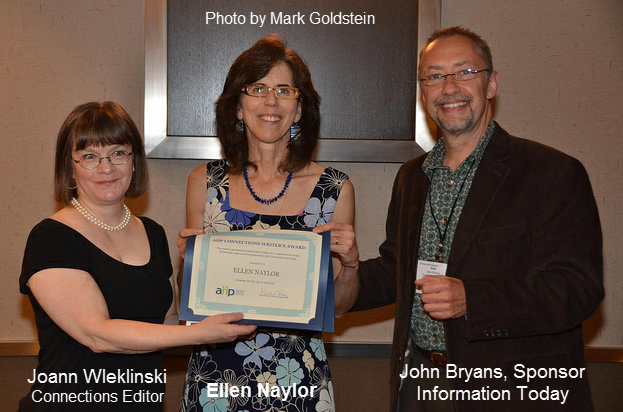
I recently was the recipient of the AIIP’s Connections Writer’s Award, which is presented to “the writer of the best original article published in AIIP Connections each year.” Unfortunately you have to be an AIIP member to access this article. However, in the spirit of cooperative intelligence, I will provide a summary, and encourage you independent entrepreneurs to consider joining AIIP to help you grow your business. This is a group of people who want to help you succeed in your small business, whether you’re just starting out or have been in business for a while. In addition to full members who own their business, AIIP also offers associate membership to those who work in larger companies and student membership.

Critical thinking and intuition are two skills that are often overlooked in this information explosion. We often jump to conclusions with more certainty without testing our conclusions by standing back and questioning our assumptions in a broader context. Likewise, many of us have lost touch with our intuition, which I consider the barometer of veracity. Nothing replaces the gut reaction that tells a researcher that something doesn’t feel right, something is missing, or that she is confident with her findings.

I recall a project where I couldn’t understand why the target company would remain in the glass industry when they were losing more money every year in this business. I learned that the company had invested as little as it could to keep the operation running, that there were occasional accidents, and that many glass products were trashed since the quality was so bad. There were glass trash piles around the factory and it sounded like an awful place to work.

The company was making money in its other divisions, and was publicly held so there was scrutiny by analysts about its operation. My client suggested I listen to a quarterly earnings discussion, which I reluctantly agreed to as I figured I could more quickly read it later. Boy was I wrong. One analyst asked the CEO about the failing glass business. The CEO’s voice turned emotional as he skirted the question in a mournful tone of voice. His Dad had bought the glass business, and the CEO was emotionally attached to it. He would feel like a failure were he to sell this business.

My intuition told me that it would take a major bad event to push this CEO out of the glass business, such as a bad factory accident or a disgruntled stockholder. A couple of years later, a disgruntled stockholder, an investment company with a large share of stock ownership, issued a formal written complaint (Form 13D) with the SEC. Divestiture followed. My client was ready to grab the business.

I have been in business for almost 20 years, and still make mistakes when I don’t listen to or trust my intuition. Listening to your intuition is one of the most precious gifts you have in life. It can save you a lot of time in the research and competitive intelligence processes, and can help you qualify your sales prospects and deal with people authentically.

12 Tips to Guarantee Your Success in Collecting Intelligence from Sales

Recently I gave a webinar for SCIP chapters in Mercyhurst and Ohio on how to capture competitive intelligence from Sales by using cooperative intelligence skills. I love serving Sales Reps since I can easily translate what I provide into an ROI benefit, namely more sales. Ongoing sales intelligence is the best tactical competitive intelligence, and it’s current.

1. First realize how Sales is motivated: they have a short-term outlook, want to look good, are often in competition with each other, and have a high need for recognition.

2.You need to Give to Sales before they will believe in you. And it better be what they need, not what your corporation wants Sales to have. Likewise if you don’t use what Sales provides, they will stop giving.

3. Gaining cooperation from Sales isn’t tough. It’s in their best interest to collect competitive intelligence to do their job, to win more deals. You just need to convince them that you’re a worthy client.

4. Find out what’s hard for them to get that they value. You have access to so much information. What about those industry analyst or financial analyst reports? How about competitor profiles you’ve developed? They’ll tell you what they need.

5. Make it easy for them to locate what you develop for them. It’s best if you can make it part of a software system that they already use like salesforce.com. Remind them where your nuggets of information reside periodically.

6. Think about ways you can help sales depending on where they are in the sales cycle. What do they already produce that you can build off of?

7. Start slow in Sales and find the right people to service. They can be low in the organization as long as they’ll publicize how great what you provided is. While Sales Reps spend a lot of time out of the office, it’s amazing how connected they can be. As you start producing the right deliverables for Sales, their bosses will find out, and you will be recognized.

8. Insert yourself into Sales events like teleconferences, conferences, webinars or blogs to maintain your visibility.

9. Be easy to find and responsive since many in corporations hide from Sales rather than service them.

10. I enjoy developing win loss analysis programs since I can cooperatively include Sales as I get positioned with their customers and prospects to learn how we can improve win rates, customer service, product features, implementation, tech support, customer testimonials, develop better products and so much more.

11. Involve Sales for Trade Show collection since they’re already at shows with their customers, so put them to work collecting competitive information since most have not a shy bone in their body. They know how to ask the right questions, so you don’t need to train them.

12. A final tip: don’t forget to ask Sales how you’re doing so you continue to deliver the right products to your sales force.

Serve Sales well and you will have job security even in a tough economy since they are the company’s revenue producers!

I have posted the Sales Intelligence presentation in Slideshare.